
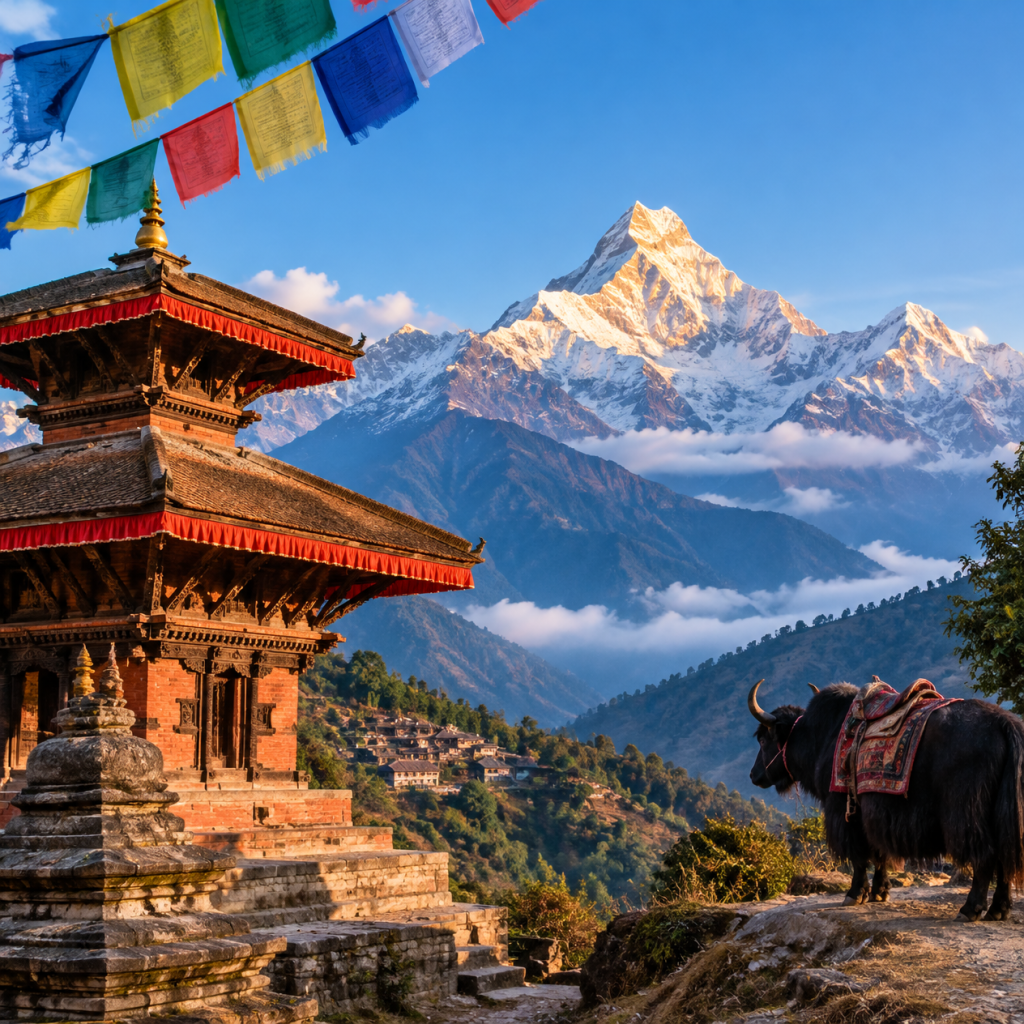
Things I’ve learned from going down the Nepal research rabbit hole.
I’ve been doing a little homework to prepare for this trip. And apparently, there’s a lot more to this country than mountains, monasteries, and Mount Everest.
Here are some interesting things I’ve learned so far.
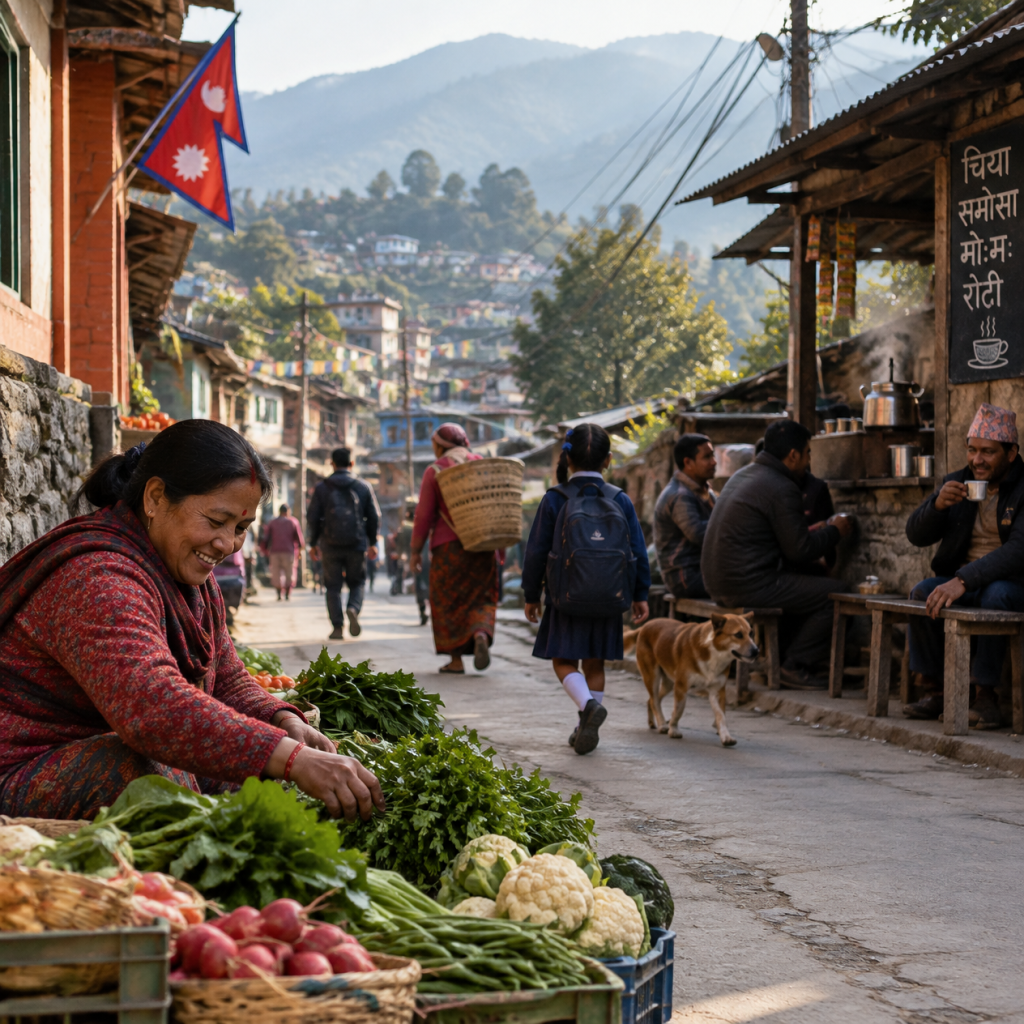
- Nepal has the world’s only non-rectangular national flag. Most countries went with the traditional rectangle. Nepal apparently decided to be different. Its flag is made up of two stacked triangular shapes, with a white moon and sun. The two triangles are thought to represent the Himalayas, while the sun and moon symbolize the hope that Nepal will endure as long as they do.
- Nepal’s time zone is unusually specific. Nepal is 5 hours and 45 minutes ahead of UTC. That’s right: not 5 hours, not 6 hours, but 5 hours and 45 minutes. It’s also 15 minutes ahead of neighboring India. Because apparently, being almost on the hour just wasn’t interesting enough. (For those wondering that puts Nepal 12 hours and 45 minutes ahead of where I live!)
- Nepal has its own calendar. Nepal officially uses the Bikram Sambat calendar alongside the Gregorian calendar used internationally. It’s approximately 56 years and 8 months ahead of ours. That means while we’re living in 2026, Nepal is in the year 2083! Its New Year usually falls in mid-April.
- Mount Everest is still growing. I assumed the world’s tallest mountain had pretty much reached its final form. Nope! Scientists estimate that Everest is rising by roughly 2 millimeters a year. Part of that growth is caused by erosion from nearby rivers, which removes material and allows the Earth’s crust to slowly rebound upward. Even mountains aren’t finished growing!
- Nepal is home to eight of the world’s fourteen highest mountains. Any mountain over 8,000 meters is considered an eight-thousander. Nepal is home to eight of them, including Everest, Annapurna I, Dhaulagiri, and Manaslu. So, yes, the mountain views might be pretty spectacular.
- Nepal has an incredible range of elevations. The country stretches from lowland plains only about 60 meters above sea level to the summit of Mount Everest at 8,848.86 meters. That means tropical-feeling lowlands and some of the coldest, highest places on Earth exist within one relatively small country.
- Nepal has more than just mountain wildlife. The country is home to animals including Bengal tigers, one-horned rhinoceroses, snow leopards, red pandas, and elephants. Nepal’s landscapes range from subtropical jungles to alpine mountain environments, which means its wildlife is just as varied as its scenery.
- The national flower is a rhododendron. Rhododendrons are Nepal’s national flower, and they grow throughout the country’s hills and mountains. In spring, entire hillsides can burst into color. I’m adding that to my list of things I’d love to see!
- Buddha was born in Nepal. Lumbini, located in southern Nepal, is recognized as the birthplace of Siddhartha Gautama, who became known as the Buddha. It’s an important pilgrimage destination for Buddhists from around the world and a UNESCO World Heritage Site.
- Nepal has thousands of rivers. Nepal is often called the water tower of South Asia. It has approximately 6,000 rivers and rivulets, many fed by Himalayan snow and rainfall. Those rivers are important for drinking water, agriculture, and hydropower.
And that’s Part 1!
These are just a few of the things I’ve learned while preparing for this adventure. I’m sure there will be plenty more to discover once I’m actually there.
Part 2 will come during or after my travels, when I can share the things I learn firsthand.
Because reading about a place online is one thing. Actually being there is another.
Stay tuned. I’m just getting started!





Leave a Reply